Skip to content

Engage Laramie Science

Students, science and community connections

Search
  • BlogReflections and insights on sharing science from UWyo student at all career levels
  • Listen Now!Connect local art + science – listen to audio interpretations of murals and museum pieces
  • Contact
  • About

How do you throw a party in space?

….You planet! Jokes, personal insights, works in progress, and scicomm experiements are some of the #LocalScientist content you’ll discover on Engage Laramie Science. Jump on in!
About

​ENGAGE LARAMIE SCIENCE is a curated, collaborative project featuring content created by students of University of Wyoming courses about science communication. Science communication courses at the University of Wyoming provide hands-on experience communicating within and beyond science disciplines. By researching, writing, and recording audio guides for a selection of public…Continue reading “About”

12Jun 202128 Oct 2021
Add a comment

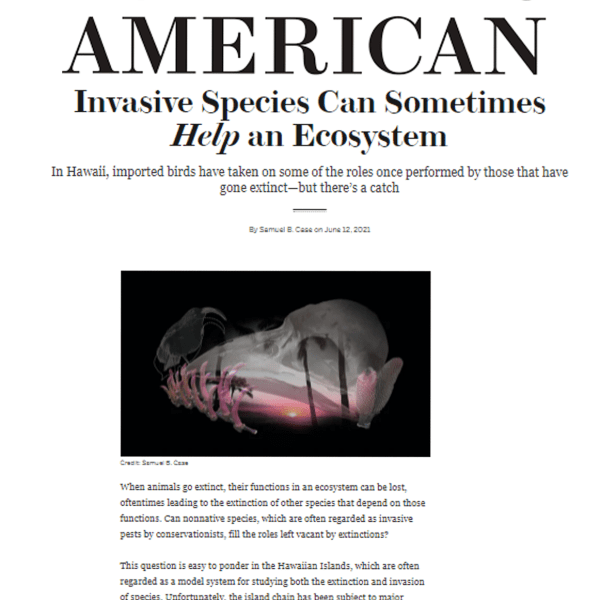
UW SciComm student publishes op-ed in Scientific American

In this piece in Scientific American, Sam Case discusses the complexity of invasive or nonnative species performing ecosystem functions that…

6May 202128 Oct 2021
Add a comment

Science of SciComm: Fostering Positive Relationships Between Science and Students

Post by Claire Campion My interest in science and the environment stemmed from engaging teachers who invested time into their…
Featured

Listen Now!

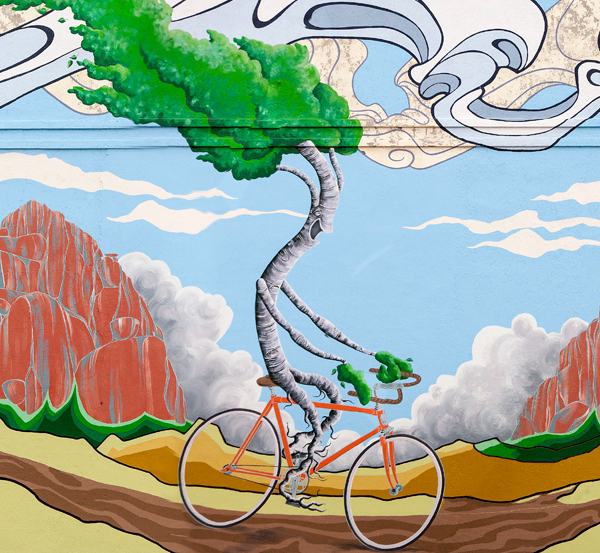
Local scientists and science students interpret local art. Follow the links below to listen to audio recordings of science +…

Excerpts

​Field notebooks are one way to approach science in an honest and candid form. This approach can be engaging to a non-expert audience by directing observations, descriptions, and thoughts to a page and filling it with curiosity. The unedited form welcomes a general audience to connect with science and the author and delve into the shared inherent awe of nature scribbled on the pages.

Ellen Keaveny

I loved drawing the scene in front of me without the pressure of perfection, and the drawing captured more memories and emotions from the trip than pictures ever could have. Sketching the area is something I would not have considered doing before this class. I felt that it was the first step towards making a habit of sketching frequently in the field and I’m excited to continue the practice this summer.
Lindsey Boyle

I often have difficulty explaining my research to those outside of the science field and breaking it down for anyone to understand. I hoped a few sketches could more easily explain the basis of my research in order to engage those outside of academia and open up the conversation for further discussion.
Lindsay Martinez

​Science is not about proving yourself right; science is about becoming right. It’s about tacking towards the truth with all the tools at your disposal, correcting course when your peers help indicate your errors, and trusting that the winds of curiosity will push you towards genuine insight. 
Dan Albrecht-Malinger

That some scientists’ social media following outstrips their citation count should not imply a lack of credibility. If all scientists were more Kardashian-like in their ability to influence the public, we might not be living in a “post-truth” era.
Chris Petranek

#SciComm…

New York Times features research by UWyo SciComm Student and Collaborators

1 Oct 201915 Mar 2020
Screenshot from NYT article In this piece from the New York Times, Daniel Beverly discusses research that he developed a video to present during the Fall 2017 Art of Science…
Uncategorized

The art of notebooks & metadata: A powerful catalyst

7 May 201915 Mar 2020
Post by Ellen Keaveny Field note inspiration from Leonardo da Vinci's notebooks Prior to the start of this class, I considered only notebooks filled with text and data tables in…
Uncategorized

The art of notebooks & metadata: Helping us keep our eyes wide open

30 Apr 201915 Mar 2020
Post by Emily Gelzer Notes before (left) and after (right) taking the Art of Notebooks & Metadata class, © Emily Gelzer, 2019 ​If anyone peered into my notebook right this…
Uncategorized

The art of notebooks & metaData: A means for pondering all manner of things about life

23 Apr 201915 Mar 2020
Post by Lindsey Boyle Butterfly illustration, © Lindsey Boyle, 2019 ​I found the course I took this semester -- The Art of Notebooks & Metadata -- incredibly inspirational, and it…
Uncategorized

Visualizing Science: Visualizing community filtering

5 Feb 201913 Aug 2019
Post by Alice Stears This visual shows the process of community filtering using the analogy of a pool party. From the pool of guests who could potentially attend the party…
Uncategorized

Visualizing Science: The avian hybrid zones of the Great Plains

29 Jan 201915 Mar 2020
Post by Paul Dougherty Excerpt of full illustration by Paul Dougherty, © 2018 Many species of plants and animals reach the limits of their distributions in the Great Plains of…
Uncategorized

Visualizing Science: Land transition in India at a glance

22 Jan 201915 Mar 2020
Post by A. Nicole Reed Figure 1: Landscape photos paired with hand-drawn illustrations of the change in landscape overtime, depicting the change from old growth forest to cropland. ©A. Nicole…
Uncategorized

Visualizing Science: Why are there so few white-winged crossbills?

15 Jan 201915 Mar 2020
Post by Cody Porter Excerpt of full illustration, © Cody Porter, 2018 ​​This image represents my attempt to illustrate a striking pattern in the system I study: crossbills (Loxia). Globally,…
Uncategorized

Visualizing Science: Ungulates migrate through a maze of human development

8 Jan 201915 Mar 2020
Post by Mallory Lambert Exerpt from illustration by Mallory Lambert, © 2018 My intention with this was to make a fun poster style image (with minimal text) that explains one…
Uncategorized

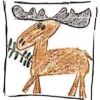
Visualizing Science: How many twigs can a moose eat?

1 Jan 201919 Apr 2021
Post by Lindsay Martinez Image credit: © Lindsay Martinez, 2018 ​For this design, I intended to display a key research question of my master’s degree in a simplified sketch for…
Uncategorized

Visualizing Science: Sharp-tailed grouse survival

25 Dec 201815 Mar 2020
Post by Jonathan Lautenbach This image is an early draft representing my research trying to understand how landscape features might influence the survival of sharp-tailed grouse in south-central Wyoming. ​I…
Uncategorized

Visualizing Science: Collaborative data visualization in virtual worlds

18 Dec 201815 Mar 2020
Post by Rajiv Khadka Collaboration between researchers and scientists across different type of visualization platforms is essential for increasing the effectiveness of scientific workflow to understand and discover novel pieces…

Posts navigation

Older posts
Newer posts

© 2017-2020+ | The contents of this site are the intellectual property of individual contributors and/or the site owner. Contact us with reproduction requests.

Blog at WordPress.com.
Privacy & Cookies: This site uses cookies. By continuing to use this website, you agree to their use.
To find out more, including how to control cookies, see here: Cookie Policy
  • Subscribe Subscribed
    • Engage Laramie Science
    • Already have a WordPress.com account? Log in now.
    • Engage Laramie Science
    • Subscribe Subscribed
    • Sign up
    • Log in
    • Report this content
    • View site in Reader
    • Manage subscriptions
    • Collapse this bar
 

Loading Comments...
 

    Design a site like this with WordPress.com
    Get started