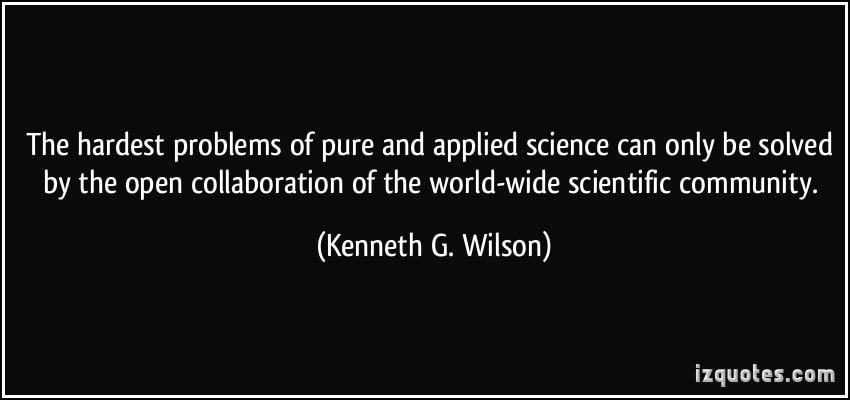
pursuing interdisciplinary research and
scientific communication, it has become undeniable that we need to see more of the two.”

As defined by the National Science Foundation, interdisciplinary research is, “a mode of research by teams or individuals that integrates information, data, techniques, tools, perspectives, concepts, and/or theories from two or more disciplines or bodies of specialized knowledge to advance fundamental understanding or to solve problems whose solutions are beyond the scope of a single discipline or area of research practice.”
Take this idea into consideration, with the following image:
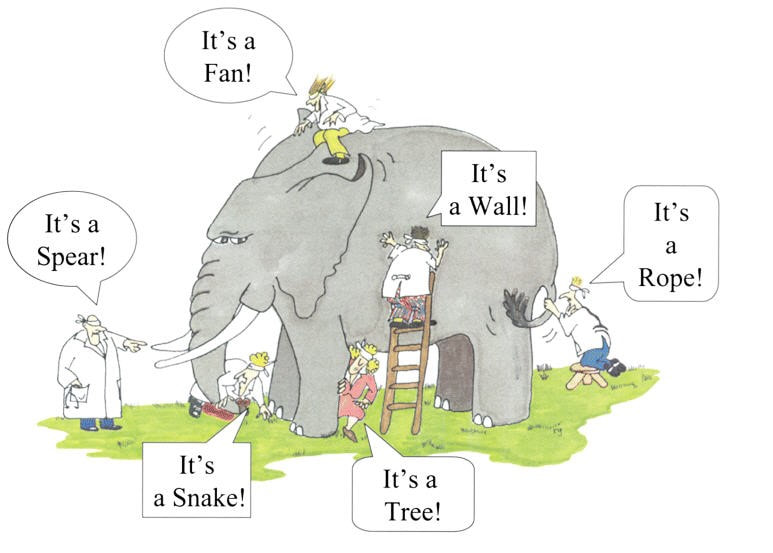

New scientific research has begun to shift towards this concept of interdisciplinary work. Personally, I have started to see a shift towards more interdisciplinary efforts (mainly within the estuarine science community). I have also heard the overwhelming demand for more of this type of research from many scientific and public communities. Scientists now stress the need for improving interdisciplinary research and science communication, however, the biggest overarching concern surrounding these objectives is – how do we as scientists make this shift from our conventional research training, to interdisciplinary efforts?
Scientists have struggled with tackling interdisciplinary work, similar to the challenges faced in effectively communicating science. An article written by Felicity Callard, frames this issue from a realistic point of view, highlighting that, “yet as much as everyone seems to agree that it’s a good thing, interdisciplinary work is a rather difficult thing to do too.”
Similarly, Nature’s recent feature on “interdisciplinarity”, highlights the challenge that, “Interdisciplinary science must break down barriers between fields to build common ground.”
While scientists face many challenges in pursuing interdisciplinary research and scientific communication, it has become undeniable that we need to see more of the two.
So, being that it is my last post, I would like to leave us off with a challenge. I challenge us all to pursue THESE challenges in interdisciplinary research and science communication, using innovative approaches and collaborations. Because if we work together, to communicate together, then hopefully we can eventually come to an understanding together.