
Science is a vital tool though it is too often misconstrued with poor communication. My goals for promoting science communication is reducing the stigma of not understanding scientific inquiry. I want to make scientific concepts fun and exciting for vastly different audiences, while trying to alleviate the misconception that science is not for everyone. Secondly, can we (as a community) promote critical thinking on how scientific finding expand our understanding of the world.
Currently, I am working my PhD in hydrology quantifying at how plants influence water movement through ecosystems. Forest transpire upwards of 60% of the water that falls from the sky; however, questions still loom as the remaining precipitation does not add up to the total outputs. This may sound inconsequential, but western United States is highly dependent on mountain water yields for cities and agriculture. Thus, poor communication where the water goes decreases clean water available for water managers and municipalities.
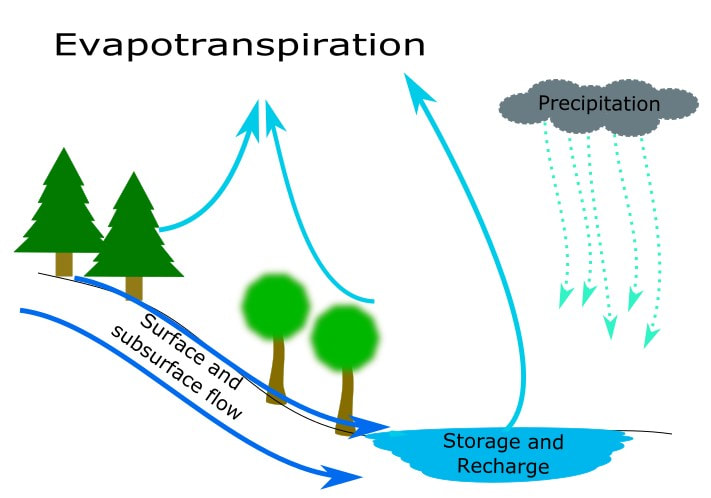 Simple conceptual model of where water goes and pathways that are commonly measured (Created by Daniel Beverly)
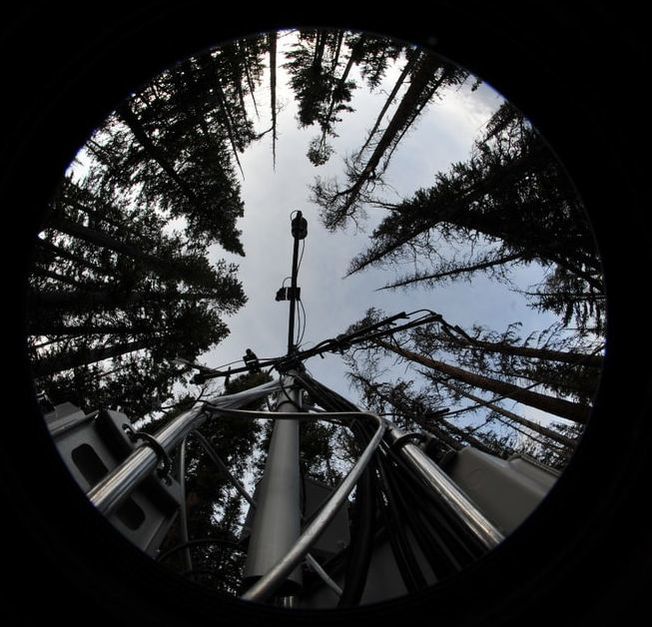
 Hemispherical photo of flux instruments and canopy. Closer look shows much of the canopy is dead result of latest bark beetle infestation in the mid-late 2000’s. (Photo taken by Daniel Beverly)
Looking forward for seeing how we can improve science communications, I will be posting about art, science, and communicating science with local communities. For now, I will leave off with a quote my favorite science communicator, Aldo Leopold:
“Our ability to perceive quality in nature begins, as in art, with the pretty. It expands through successive stages of the beautiful to values [or data] as yet uncaptured by language.”
—Cheers until next time,
Daniel Beverly

