
of your own home. No lab coats, no writing code,
no wandering the landscape looking for a specimen, no staying up all night gathering data. Just you, your computer, and your sweatpants.
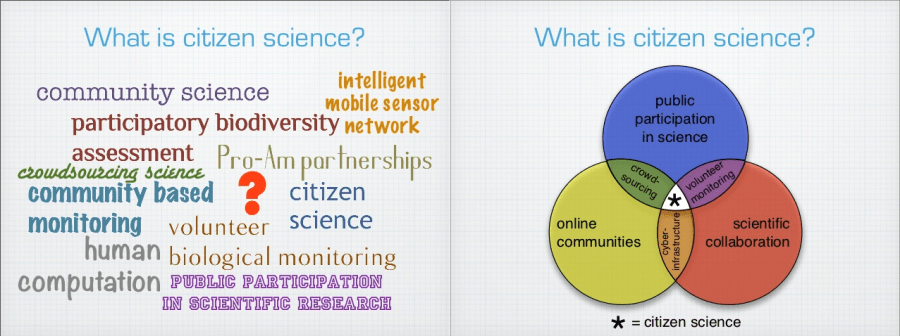
We are in the era of enormous data sets. Technology has surpassed the human ability to keep up with it all, yet human analysis will always be superior to a machine (in my humble opinion). Scientists found the answer — get more people! But getting more specialists is a difficult and expensive endeavor, so scientists have turned to the general public. Non-experts can sift through the data as a first pass and flag anything interesting. The flags are reported to specialists, who then make that particular data a priority for analysis. This is a zero-pressure and fun way to get involved. If you’re wrong, no biggie. If you’re right, you just helped with a scientific discovery! And you can do this all from the comfort of your own home. No lab coats, no writing code, no wandering the landscape looking for a specimen, no staying up all night gathering data. Just you, your computer, and your sweatpants.
Image courtesy of of Galaxy Zoo.
Image courtesy of SETI@home.
|
Right now I’m going to introduce you to a couple of my favorite citizen science projects.
Galaxy Zoo needs your help classifying galaxies based on their shape and special features in order for astronomers to study galaxy evolution. I have my Intro Astronomy students do this for a lab and it’s always one of the most fun days. However, if you’re looking for something a little more exciting then you can check out SETI@home where you can listen to see if E.T. is on the phone. Searching for aliens without having to leave the house? It doesn’t get any better than that. |
“The Universe is a pretty big place. If it’s just us, seems like an awful waste of space.”
— Carl Sagan
 Engage Laramie Science