Skip to content

Engage Laramie Science

Students, science and community connections

Search
  • BlogReflections and insights on sharing science from UWyo student at all career levels
  • Listen Now!Connect local art + science – listen to audio interpretations of murals and museum pieces
  • Contact
  • About

How do you throw a party in space?

….You planet! Jokes, personal insights, works in progress, and scicomm experiements are some of the #LocalScientist content you’ll discover on Engage Laramie Science. Jump on in!
About

​ENGAGE LARAMIE SCIENCE is a curated, collaborative project featuring content created by students of University of Wyoming courses about science communication. Science communication courses at the University of Wyoming provide hands-on experience communicating within and beyond science disciplines. By researching, writing, and recording audio guides for a selection of public…Continue reading “About”

12Jun 202128 Oct 2021
Add a comment

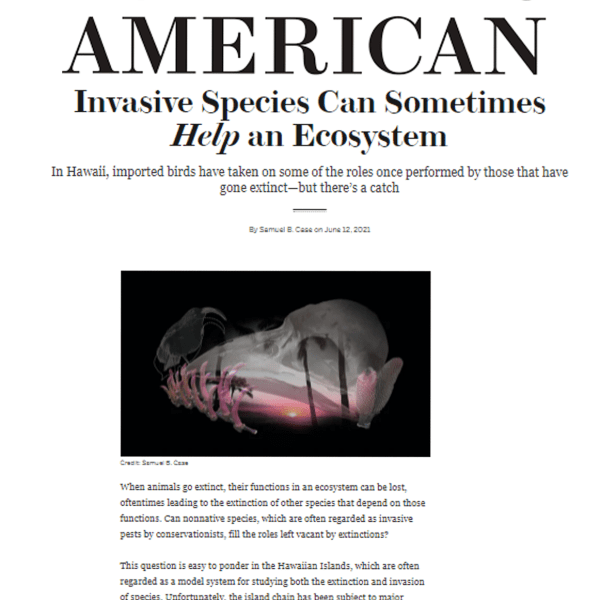
UW SciComm student publishes op-ed in Scientific American

In this piece in Scientific American, Sam Case discusses the complexity of invasive or nonnative species performing ecosystem functions that…

6May 202128 Oct 2021
Add a comment

Science of SciComm: Fostering Positive Relationships Between Science and Students

Post by Claire Campion My interest in science and the environment stemmed from engaging teachers who invested time into their…
Featured

Listen Now!

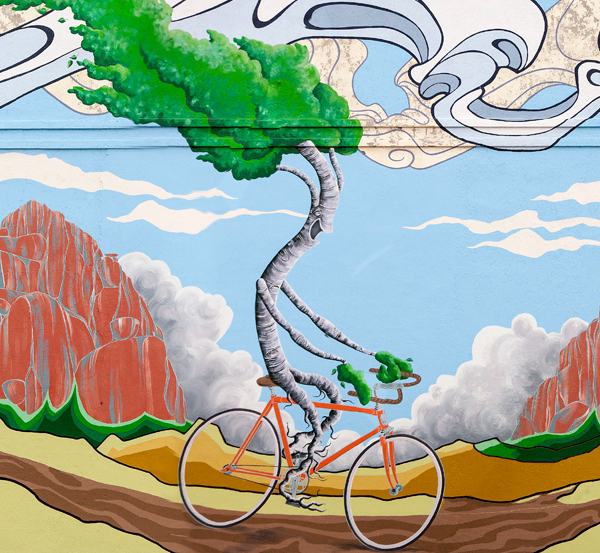
Local scientists and science students interpret local art. Follow the links below to listen to audio recordings of science +…

Excerpts

​Field notebooks are one way to approach science in an honest and candid form. This approach can be engaging to a non-expert audience by directing observations, descriptions, and thoughts to a page and filling it with curiosity. The unedited form welcomes a general audience to connect with science and the author and delve into the shared inherent awe of nature scribbled on the pages.

Ellen Keaveny

I loved drawing the scene in front of me without the pressure of perfection, and the drawing captured more memories and emotions from the trip than pictures ever could have. Sketching the area is something I would not have considered doing before this class. I felt that it was the first step towards making a habit of sketching frequently in the field and I’m excited to continue the practice this summer.
Lindsey Boyle

I often have difficulty explaining my research to those outside of the science field and breaking it down for anyone to understand. I hoped a few sketches could more easily explain the basis of my research in order to engage those outside of academia and open up the conversation for further discussion.
Lindsay Martinez

​Science is not about proving yourself right; science is about becoming right. It’s about tacking towards the truth with all the tools at your disposal, correcting course when your peers help indicate your errors, and trusting that the winds of curiosity will push you towards genuine insight. 
Dan Albrecht-Malinger

That some scientists’ social media following outstrips their citation count should not imply a lack of credibility. If all scientists were more Kardashian-like in their ability to influence the public, we might not be living in a “post-truth” era.
Chris Petranek

Uncategorized

The need to maximize science communication

3 Oct 201715 Mar 2020
Author: Daniel Beverly, PhD candidate studying plant physiology "Abstract concepts need to be explained at local community level producing memories, not factoids." Scientists need to get back to interacting and communicating…
Uncategorized

Science from all angles: An INTERDISCIPLINARY TALK

28 Sep 201715 Mar 2020
Author: Chelsea Duball, PhD candidate studying soils ​"While scientists face many challenges in pursuing interdisciplinary research and scientific communication, it has become undeniable that we need to see more of…
Uncategorized

Just a tree hugger with some fluxing questions

28 Sep 201715 Mar 2020
Author: Daniel Beverly, PhD candidate studying plant physiology Fluxers in action setting up new instruments. (Photo taken by Adam Nibbelink) My Name is Daniel Beverly and I will be running the SciComm…
Uncategorized

A common ground: Embracing the unknown, connections, and perspectives within science and art

24 Sep 201715 Mar 2020
Author: Chelsea Duball, PhD candidate studying soils A provoking quote from late Theoretical Physicist, Albert Einstein. ​Albert Einstein found common ground between art and science, via the power of the unknown. Quote…
Uncategorized

A “Dirt” Dame dabbles in diversifying discussions

22 Sep 201715 Mar 2020
Author: Chelsea Duball, PhD candidate studying soils "By delving deeper into the applications of science communication, I have improved my scientific methods, and it has encouraged me to further incorporate…
Uncategorized

Science in the public eye

18 Sep 201715 Mar 2020
Author: Dan Albrecht-Mallinger, PhD candidate studying forest birds in Panama "Like public art, if our goals are for knowledge to be shared and for discoveries to understood, we scientists are obliged…
Uncategorized

Public art through the eyes of scientists

17 Sep 201715 Mar 2020
Author: Dan Albrecht-Mallinger, PhD candidate studying forest birds in Panama "Scientists have long appreciated the arts, and even utilized arts in their practice...This does not mean that scientists won't bring their…
Uncategorized

Dan, Dan, the Manakin Man

13 Sep 201715 Mar 2020
Author: Dan Albrecht-Mallinger, PhD candidate studying forest birds in Panama "Tropical biology is a new topic for many audiences, and climate change can be difficult to describe and discuss. My professional goal…
Uncategorized

Meet the science communicators, edition 3: Soil and plants have a lot of chemistree

12 Sep 201715 Mar 2020
Author: Melanie Torres, PhD candidate studying amphibians Sometimes, field sites can have fantastic views (Image provided by: Dan Beverly). An example of a soil profile and profile development (Image provided by:…
Uncategorized

Meet the science communicators, edition 2: Birds, black holes, and science, oh my!

10 Sep 201715 Mar 2020
​Author: Melanie Torres, PhD candidate studying amphibians A depiction of the Milky Way Galaxy (Image from Google). A red crossbill (Loxia curvirostra) hanging on a limb (Image from Google). Good evening,…
Uncategorized

Meet the science communicators, edition 1: Throwing a line to our aquatic ecologists

8 Sep 201715 Mar 2020
​Author: Melanie Torres, PhD candidate studying amphibians Aquatic research at its finest! (Image provided by: Rich Walker) Measuring fish can be vital towards understanding aquatic systems (Image provided by: Bryan Maitland).…
Uncategorized

Introducing Melanie Torres: A PhD student with amphibious ambitions

6 Sep 201715 Mar 2020
Author: Melanie Torres, PhD candidate studying amphibians "I want to learn the skills to effectively communicate both my research and how amazing amphibians are to even the greatest skeptic. With…

Posts navigation

Newer posts

© 2017-2020+ | The contents of this site are the intellectual property of individual contributors and/or the site owner. Contact us with reproduction requests.

Blog at WordPress.com.
Privacy & Cookies: This site uses cookies. By continuing to use this website, you agree to their use.
To find out more, including how to control cookies, see here: Cookie Policy
  • Subscribe Subscribed
    • Engage Laramie Science
    • Already have a WordPress.com account? Log in now.
    • Engage Laramie Science
    • Subscribe Subscribed
    • Sign up
    • Log in
    • Report this content
    • View site in Reader
    • Manage subscriptions
    • Collapse this bar
Design a site like this with WordPress.com
Get started