
Post by Austin Shaffer
In the face of anthropogenic degradation and the impacts of climate change, the conservation of natural ecosystems and the organisms that live in them must be properly addressed. In order to properly address this issue, however, it is crucial to possess a frame of reference, particularly in the long term, so as to fully understand how the biosphere may respond to environmental stressors. This is where the field of paleontology comes into play. Research in the field of paleontology can allow for recognition of how organisms and ecosystems have reacted to similar environmental stressors in Earth’s past. Yet, a gap remains between research conducted by paleontologists and its implementation in conservation. This gap must be narrowed and ideally eliminated otherwise conservation, management, and restoration policies and decisions will likely continue to be made without reference to past conditions, patterns, and processes. Meanwhile, the research would continue without serving any meaningful purpose.
This is an issue in which I have become invested over the last year as a result of my involvement in a literature review research project looking to examine the extent of the research-implementation gap between conservation policy and paleontological study. My work in this project has shown me that this disconnect between these fields remains substantial. As these are two fields in which I have held lifelong interest, passion, and career aspirations, it troubles me that all-too-important collaboration is rarely undertaken.
The importance of preserving biodiversity cannot be understated. If biodiversity declines significantly, a number of different ramifications would spread throughout society and the natural world. From less tourism and recreation to disrupted environmental systems and lower productivity in agriculture, fishing, and forestry to fewer avenues for future medical research, and so on and so forth, biodiversity losses would be felt by those the world over and from every walk of life. As such, conservation, management, and restoration of the natural world are of pertinent concern.
Paleontology research has many applications to contemporary management and restoration. In particular, work focused on the Quaternary Period—spanning the last 2.58 million years and including the last ice age—holds significant relevance. Given that many species studied by paleontologists during the Quaternary are still alive today (or at least have close living relatives) as well as the fact that many frequent and rapid climatic shifts occurred during the period (providing a possible reference for some of the current changes in climate), research done into this time has a large degree of relevance to the modern-day. As such, the Quaternary provides a great opportunity for collaboration between paleontologist researchers and conservation professionals, with many options for cross-disciplinary application and collaboration.
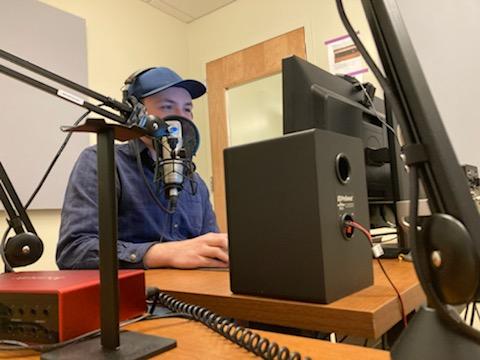
In order to address the larger issue of implementing paleontology research into conservation, it is essential to move beyond the realm of peer-reviewed publications. Only by going beyond such publication, by direct engagement between paleontologists and conservationists, can the research have a real impact. A dialogue must be opened between the professionals in these fields. Whatever the medium of communication, the establishment of such a dialogue is the primary means by which engagement and collaboration may occur. There are examples of this being done already, where paleontology researchers have and are working alongside conservationists and wildlife managers, such as in the Greater Everglades’ restoration of southwest Florida. Examples such as these need to be highlighted in order to encourage the further development of similar projects. I am currently working on the development of a podcast miniseries in order to help address the disconnect and establish a further dialogue. I hope that by providing an additional medium of communication, I can encourage and enable greater interaction between researchers and decision-makers. Podcasting represents an important, emerging form of science communication efforts broadly and one that must be utilized in order to better interact and engage with communities and stakeholders.
The need for collaboration between the fields of paleontology and conservation is greater now than ever before. Many goals and needs are currently shared by paleontologists and conservationists, foremost among them being the maintenance of biodiversity. This combined with the implications of anthropogenic climate change and environmental degradation makes collaboration between these two fields an issue that needs to be emphasized, particularly through the use of scientific communication techniques such as podcasting. Only through scientific communication and the development of such collaboration can the past be utilized to preserve the future.
Austin Shaffer is a senior at the University of Wyoming studying Zoology and Environmental Systems Science.
references:
Dietl, G. P., & Flessa, K. W. (2011). Conservation paleobiology: putting the dead to work. Trends in Ecology & Evolution, 26(1), 30-37.
Dietl, G. P., Kidwell, S. M., Brenner, M., Burney, D. A., Flessa, K. W., Jackson, S. T., & Koch, P. L. (2015). Conservation paleobiology: leveraging knowledge of the past to inform conservation and restoration. Annual Review of Earth and Planetary Sciences, 43, 79-103.
Louys, J. (2012). Paleoecology and conservation paleobiology: future directions. In Paleontology in ecology and conservation (pp. 253-262). Springer, Berlin, Heidelberg.
Pardi, M. L., & Smith, F. A. (2012). Paleoecology in an era of climate change: how the past can provide insights into the future. In Paleontology in ecology and conservation (pp. 93-116). Springer, Berlin, Heidelberg.
Savarese, M. (2018). Effectively connecting conservation paleobiological research to environmental management: examples from Greater Everglades’ restoration of southwest Florida. In Marine conservation paleobiology (pp. 55-73). Springer, Cham.
Smith, J. A., Durham, S. R., & Dietl, G. P. (2018). Conceptions of long-term data among marine conservation biologists and what conservation paleobiologists need to know. In Marine conservation paleobiology (pp. 23-54). Springer, Cham.
Yuan, S., Kanthawala, S., & Ott-Fulmore, T. (2021). “Listening” to science: science podcasters’ view and practice in strategic science communication. Science Communication, 1-23.
 Engage Laramie Science