
Post by Will Rosenthal
Plenty of science communication efforts start with “people really ought to do this thing, but it’s really hard to get anyone to do anything”. Specifically in communicating conservation science, there is a small list of typically cited reasons for why someone might choose to do something over doing nothing. Among these reasons are valuing ecosystem services, perceiving an intrinstic value to biodiversity, a desire to save money by using less resources, and appreciating the aesthetic value of biodiversity. These motivators can be very effective for some segments of the population, but I would argue that their extreme subjectivity to one’s experiences makes them difficult to activate and elicit action. Instead, I think science communicators working in conservation should aim to instill a moral basis for conservation in their stakeholders.
Moral imperatives to act are especially powerful because they can be harnessed in ways that do not depend on economic benefits or charismatic wildlife species. In fact, moral and social motivations to volunteer for conservation efforts have been shown to be more powerful than purely environmental motivations (Asah & Blahna 2012). However, fostering moral motivation requires a bit more nuance than pointing out “using less water means saving money” or “wetlands are necessary for duck hunting” – the Norm Activation Model explains this in somewhat simple terms. First, a stakeholder must be aware that their behavior can affect the issue at hand, then they must feel that they should be the one to act. Both of these factors working together can lead to a personal norm to act, which can in turn lead to pro-environmental behavior (Onwenzen et al. 2013).
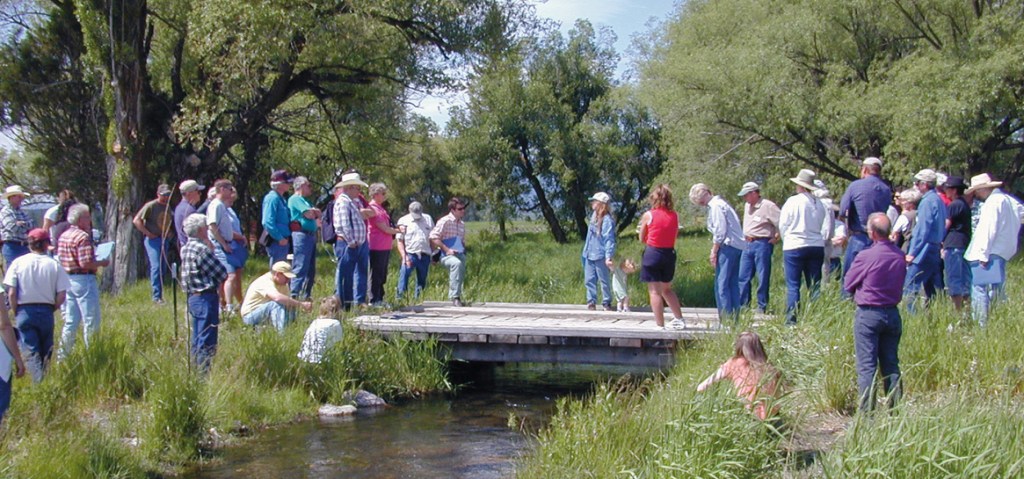
Conveying that stakeholders can make a difference and should be the ones to make that difference can be addressed directly in science communication materials and endeavors. Specifically, highlighting the incentives to act and presenting choices on how to act can empower stakeholders (DeCaro & Stokes 2008). Empowering an audience has been shown to be more effective than punishing lack of compliance (Cetas & Yasué 2017). Establishing a feeling of responsibility to act can be more difficult depending on the audience in question. For example, if working with landowners who have control over an important part of a watershed, it can be effective to appeal to their role as a steward for that place. Alternatively, if working with legislators to pass pro-environmental legislation, an appeal to their role as a community leader may make them feel that they are expected to act. Community and place-based conservation efforts often utilize these practices in developing nations to great effect (de Araujo Lima Constantino et al. 2012; Turreira-Garcia et al. 2018; Okumah et al. 2020 ).
Those hoping to engage with their stakeholders’ morality to accomplish conservation goals should take note of a few complicating factors. Developing this kind of connection with a stakeholder group is likely to take a while, especially if there is no established way to meaningfully connect with that group. Ideally, a science communicator would be able to build off of an existing conservation effort or find individuals with an existing moral motivation to help the cause. Additionally, stakeholders with more pressing concerns than biodiversity conservation, like housing or food insecurity, aren’t likely to be motivated by moral imperatives no matter how effective your communication toolkit is.
Will Rosenthal is a graduate student at the University of Wyoming.
references:
Asah, Stanley T., and Dale J. Blahna. “Motivational functionalism and urban conservation stewardship: implications for volunteer involvement.” Conservation Letters 5.6 (2012): 470-477.
Cetas, Elijah R., and Maï Yasué. “A systematic review of motivational values and conservation success in and around protected areas.” Conservation Biology 31.1 (2017): 203-212.
de Araujo Lima Constantino, Pedro, et al. “Empowering local people through community-based resource monitoring: a comparison of Brazil and Namibia.” Ecology and Society 17.4 (2012).
DeCaro, Daniel, and Michael Stokes. “Social‐psychological principles of community‐based conservation and conservancy motivation: attaining goals within an autonomy‐supportive environment.” Conservation Biology 22.6 (2008): 1443-1451.
Okumah, Murat, Ata S. Yeboah, and Owusu Amponsah. “Stakeholders’ willingness and motivations to support sustainable water resources management: Insights from a Ghanaian study.” Conservation Science and Practice 2.3 (2020): e170.
Onwezen, Marleen C., Gerrit Antonides, and Jos Bartels. “The Norm Activation Model: An exploration of the functions of anticipated pride and guilt in pro-environmental behaviour.” Journal of economic psychology 39 (2013): 141-153.
Turreira-García, Nerea, et al. “Who wants to save the forest? Characterizing community-led monitoring in Prey Lang, Cambodia.” Environmental management 61.6 (2018): 1019-1030.
 Engage Laramie Science