
Post by Leo Khasoha
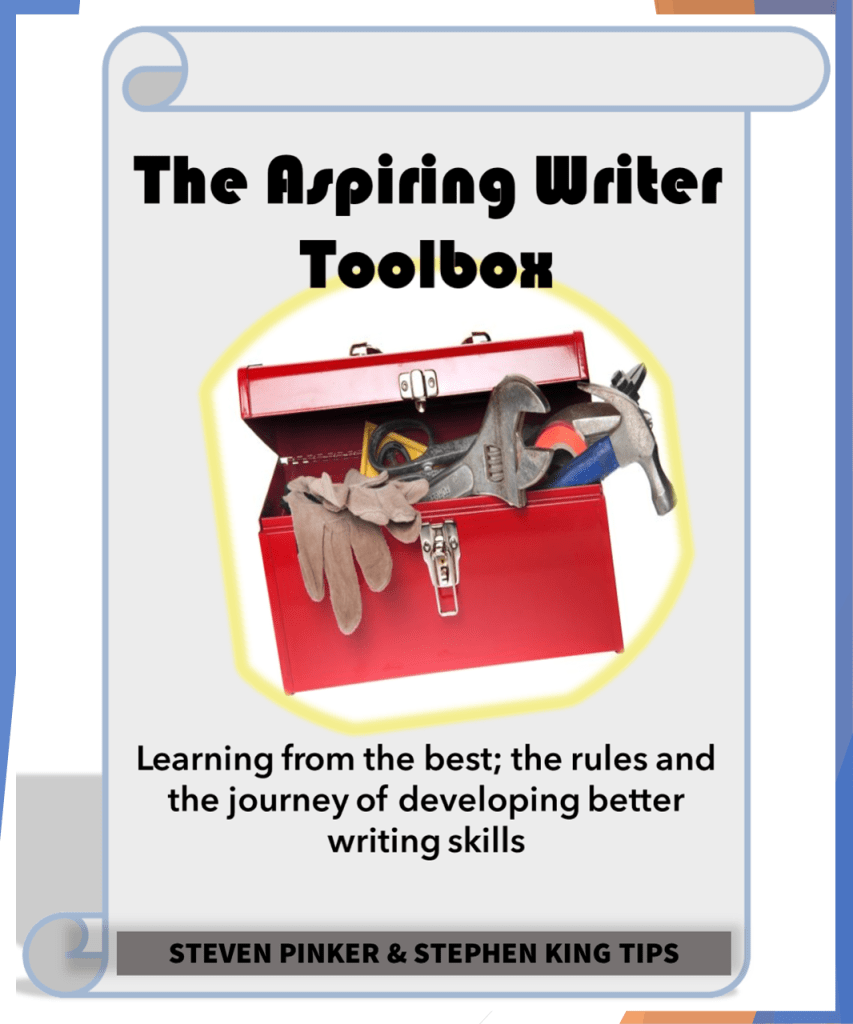
What if you cared about every other author’s rule(s) of writing? Wouldn’t you be the best writer ever? Steven Pinker, a Harvard psychologist, best described as one who loves reading authors’ rules of writing, summarized the art of writing into “Steven Pinker’s 13 rules of writing better”. Pinker’s rules seem to perfectly compare with one of the greatest authors memoirs on writing, On Writing: A Memoir of the Craft, by Stephen King. King’s book is a unique piece of writing that uses King’s autobiography to explain how good writing develops. King simply uses a story of his life to perfectly explain how writing is an art that takes time and continued efforts to develop. Right from the start, King is using a story to catch our attention and engage our emotions in what he wants to communicate.
We definitely know stories are great tools of communication, and once you know how to tell a story, then you your message is almost halfway home. King uses the different stages in his life as a mirror to the different tools of writing and each chapter of his autobiography is a buildup lesson towards making a better writer. King begins with a story from his childhood and moving on to his teenage age. He expresses the amount of weight that kept pilling on his shoulders time after time and uses this to demonstrate the persistence and the focus aspiring writers need in their journey of writing. This compares with rule 11 of Pinker that emphasizes the need to revise several times with the single goal of improving prose. It calls for persistence and a focus on the ultimate goal of satisfying yourself as a writer and also your audience. This will involve several pressing attempts of writing and rewriting just to get your prose right.
“The end goal of writing is to enrich your audience as well as your own life and this calls for persistence and focus as a writer.” ~Stephen King
Every aspiring writer must equip their toolbox with all the tools that make good writing. Going by Abraham Maslow, it is indeed tempting if the only tool you have is a hammer because you then tend to treat everything as if it were a nail. How many tools do you have in your writing toolbox?
King mentions three tools that must never miss in any writer’s toolbox: 1) vocabulary, which Pinker would advise as finding the best word to use by consulting either a dictionary or using notes and thesaurus; 2) grammar, here Pinker recommends proper use of verbs and avoiding use of needless words i.e., instead of “make an appearance” simply say “appear”; and 3) writing style. To enrich your vocabulary, and develop your grammar and writing style, King recommends setting weekly writing and reading goals.
Pinker highlights more rules on improving writing styles that every writer should evaluate their writing. Rule 10: creating coherent prose by linking each sentence to the next so as to create a story; rule 8: start with old information at the beginning of a sentence and the new information at the end just because your audience is to connect the new information to what they already know; rule 9: save the heaviest information for the last to avoid losing your audience before you even communicate the main message; rule 2: prose is a window to the world, create a vivid visual for the reader as you move them from what they know to absorption of new information.
“The three tools in any aspiring writer’s toolbox: vocabulary, grammar, and style.” ~Steven Pinker
Writing is a journey that interweaves our life experiences, character, vocabulary, grammar, and the art of everything you got to communicate to the satisfaction of self and the audience. These rules have become my litmus for charging my writing and any other writing I come across. As a graduate student, my supervisor always reminded me of giving my content some style and he would advise, “…read a lot, not only for what the authors’ are saying but also how they are saying it.” Writing is strongly an art that can be developed through reading and writing yourself. King’s book is one of the clearest books that uses life experiences to create a vivid story of the intended message, and clearly demonstrates the struggles and journeys of an aspiring writer. The two authors show how powerfully stories can be used in any writing to make that long-lasting communication.
Bottom line: read a lot, not only for what the authors are saying, but for how they are saying it.
Leo Khasoha is a graduate student in the Program in Ecology and Evolution at the University of Wyoming.
references
Steve Pinker’s 13 rules of writing. https://bigthink.com/high-culture/how-to-write-better/
King, S. (2000). On writing: a memoir of the craft. New York, Scribner.
 Engage Laramie Science