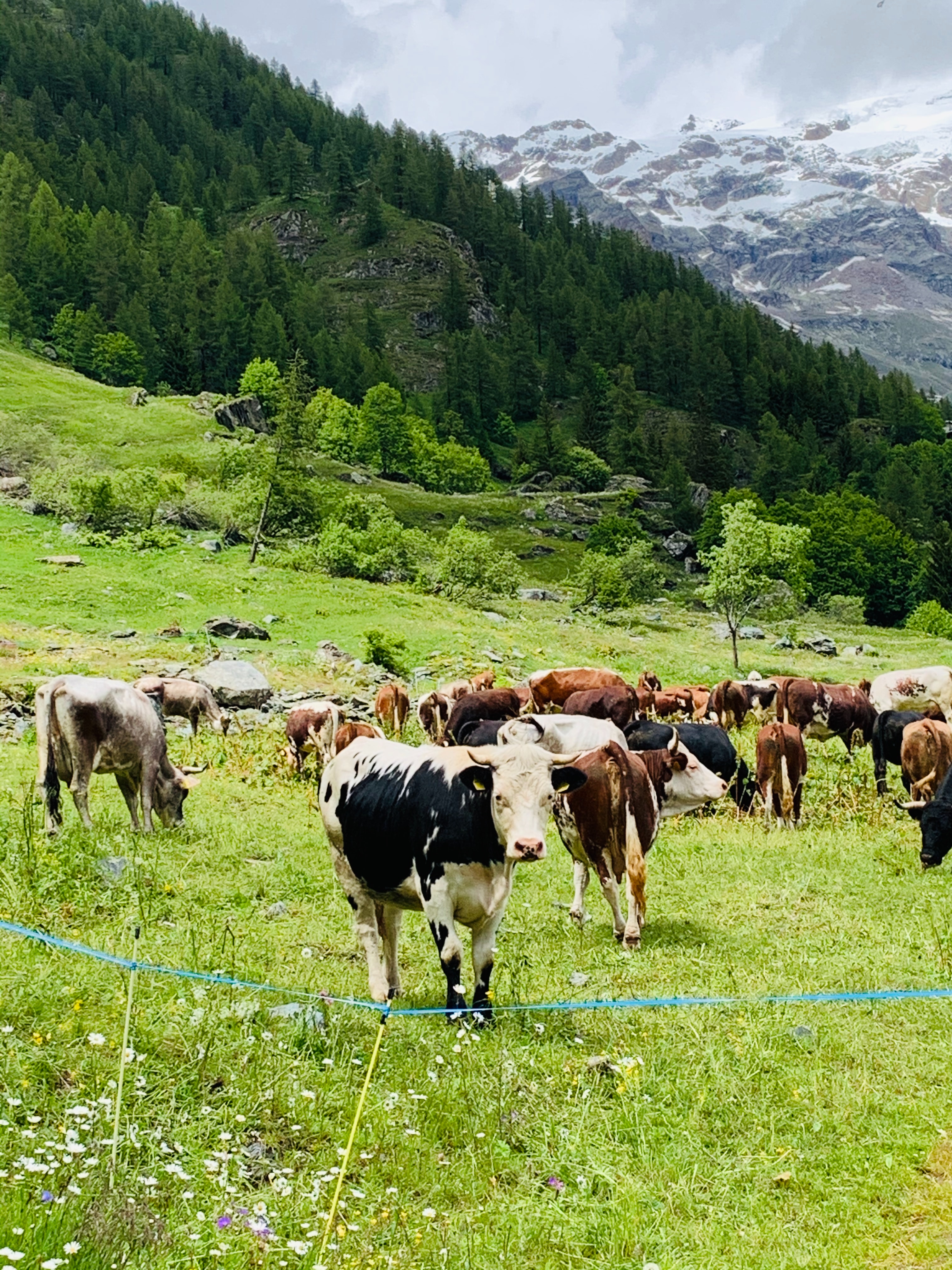
Post by Andrew Gregory

Ranching in the west is inherently challenging, and to a rancher, the challenge may be even coined as a tradition. Before America was even a country, vaqueros ran cattle throughout what is now known as Texas. Eastern influence in ranching spread rapidly after the Mexican American War, and cattle ranches continued to spread west. Ranchers took matters into their own hands to deal with challenges such as predators, cattle rustlers, Range wars, and Indian raids that left behind a blood-stained history of courage and grit.
Today the modern cowboy is still fighting for their way of life, although the challenge is different. Traditional ranching methods are under continual scientific investigation regarding habitats and ecosystem complexes brought on by cattle grazing. I’m sure that most ranchers feel attacked by federal and state agencies on the continual grazing restrictions and changes. Recently in the 21st century Cliven Bundy, a rancher in Nevada, declared war on the federal government to protect his grazing rights. The war was a long time coming but was finally triggered by the findings of endangered Desert Tortoises in the area he grazed. This blog post is not purposed to cover such controversial topics as this but rather to introduce the rancher’s side of the story, my story as a ranch kid studying fish and wildlife, and cover sustainable grazing techniques in the push and pull battle of grazing rights.
I grew up in a rather unusual situation regarding ranching and ecology. My dad got a master’s in fisheries management, and while doing his master’s project, he got hired to manage a ranch full time. The ideal situation was to work on side projects in fisheries as a private consultant while managing the ranch. What happened was he ended up working two full-time jobs. I was raised with a view of life and balance between agriculture, mainly beef production, and sustainable ecosystems. As I pursue my degree in fisheries management, I have concluded that it is hard to be a scientist who is also passionate about agriculture. The balance of giving and taking is a very fine line without anyone getting precisely what they want (Santos et al., 2014). I want to now speak to the two opposing viewpoints of the scientist and ranchers as if there was a complete disagreement.
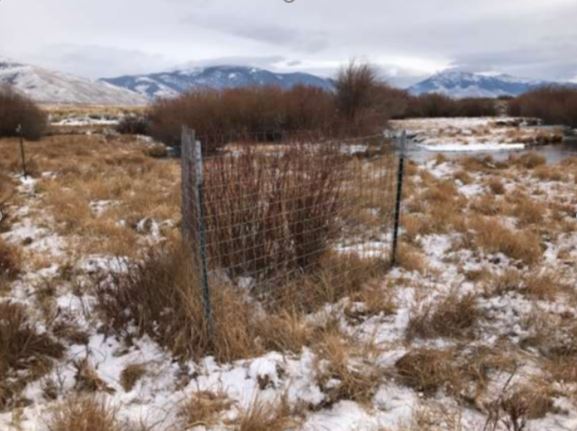
To the scientist: Ranching is a culture where you may never grasp entirely the tradition and ranching thought processes. The rancher never truly works because it is a part of who he is. When the rancher wakes up, he never goes to work. He simply lives. A person looking at the life of a rancher sees a young kid working seven days a week from sun up to sundown and never really stops until his body is old and tired and not able to handle the rigors of ranching. The passion for ranching will outweigh your passion for science because his passion has been passed down for generations. When taking on a project that impacts grazing, it would be beneficial to you and your agency to take a step back and imagine how the rancher would feel about changes to the way they ranch and take steps to make that change as minimal as possible. For example, these small enclosures (Figures 1 and 2) to protect willows have minimal impact on grazing and help stabilize banks. In addition, take note of the willow growth to the left of the enclosure vs within the enclosure. This method takes much longer than total fencing off of a riparian area in hopes of restoring bank health but still can accomplish the goal.

To the rancher: Scientists know that they are a nuisance to you. Scientists know they can be pesky to many people. With that said, I would like to apologize as much as I can to all ranchers on the scientist’s behalf. Scientists are a strange breed; they go to college for 4 to 8 years, read articles, and learn about ecosystems in which your cattle graze. What land you see as profitable; they see as having potential. There is a young ranch hand that I interviewed from Nevada who recognized a lack of biodiversity on the ranch he worked out. Each year in the spring, water was plentiful and would reach out into the flood plain to get the grass green, and then the stream would dry up just as quick as it started. He had heard that the area used to be a popular place for beavers during the mountain man era, but he had never seen any signs of a beaver in his time there. He purchased some tarp and made make-shift damns up and down the stream to imitate beaver dams. This made water stay in the stream longer, grass grow better, and the rancher could graze those plots longer. I tell you this not in hopes for you to construct beaver dams in streams but rather to portray that a healthier ecosystem sustains better grazing(Bailey, 2004).
In conclusion, we can work together to become better stewards of the land that we both care very deeply for (Varner, 2014).
Andrew Gregory is an undergraduate in the Zoology and Physiology Department at the University of Wyoming.
references
Bailey, D. W. (2004). Management strategies for optimal grazing distribution and use of arid rangelands,. Journal of Animal Science, 82(suppl_13), E147–E153. https://doi.org/10.2527/2004.8213_SUPPLE147X
Santos, M. J., Watt, T., & Pincetl, S. (2014). The push and pull of land use policy: Reconstructing 150 years of development and conservation land acquisition. PLoS ONE, 9(7). https://doi.org/10.1371/journal.pone.0103489
Varner, J. (2014). Scientific Outreach: Toward Effective Public Engagement with Biological Science. BioScience, 64(4), 333–340. https://doi.org/10.1093/biosci/biu021
 Engage Laramie Science