Post by Devin Gearhart
In the fall of 2021, I began working in a fisheries lab. Now I am a wildlife biology major and although there is an aquatic ecosystem path I could have taken, my focus was on terrestrial animals. I knew next to nothing about fish or the issues that plagued them. My day-to-day responsibilities involved me dissecting fish from the Great Lakes and taking tissue samples for future analysis and it was helpful for me to learn those skills, but I wanted more. I had an interest in data analysis and visualization using programs R and ArcGIS, and I approached my boss asking about any opportunities to put these to use. He told me of a project he was working on for the National Park Service in northwestern Wyoming and that they could use an undergraduate student to analyze the data. That is how I was introduced to the world of gill lice.
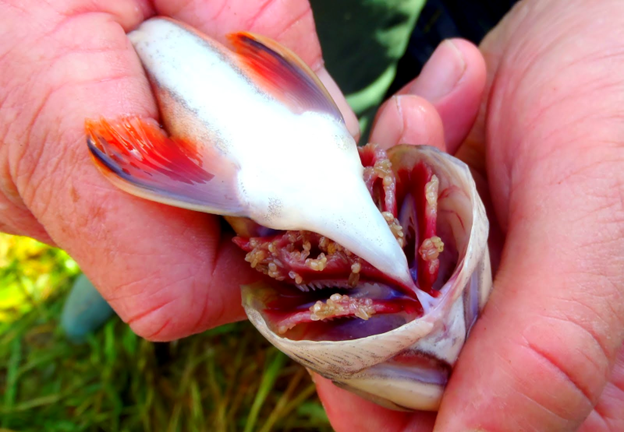
Gill lice are parasitic crustaceans that feed on the blood of fish like trout and salmon. They are small and white, resembling grains of rice, and can be found in streams and lakes around the world. They are a part of the ecosystem and in small numbers, gill lice do not have a profound effect on fish populations. Due to changing environmental conditions and higher densities of fish in certain areas, these parasites can be detrimental to fisheries. In Colorado, fisheries have collapsed from gill lice outbreaks that have infested fish and caused gill damage as well as impaired growth (Colorado Parks and Wildlife, n.d.). Because of these effects, fisheries managers are concerned that climate change will exacerbate these effects.
The fishing industry in Wyoming has an economic value of over $200 million, a quarter of wildlife-related spending in the state (Wyoming Game and Fish Department – Hunting, Fishing and Wildlife Viewing Are Economic Drivers for Wyoming, n.d.). A loss of fisheries would be detrimental to the economy of fisheries and would create fewer opportunities for anglers to enjoy the outdoors. Fish are an important part of Wyoming’s culture and a food source for many people. Although gill lice do not make fish unfit for consumption, they can stunt fish growth and compromise their immune system, making them more susceptible to disease. It is important to gain an understanding of where gill lice are found in the state and how to predict future outbreaks.
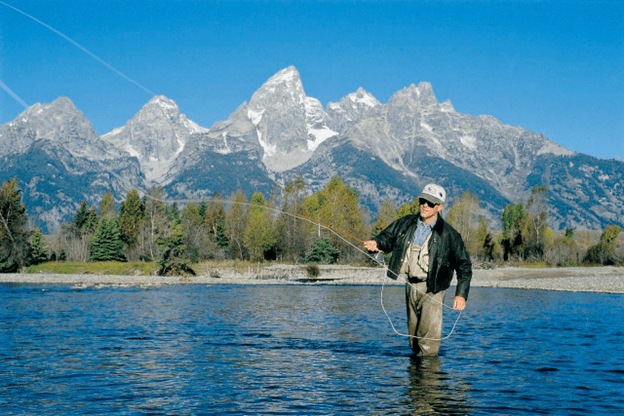
I am currently working with collaborators from natural resource agencies including the Wyoming Game and Fish Department (WGFD) and the United States Geological Survey (USGS) as well as researchers at the University of Wyoming to better understand the dynamics of gill lice outbreaks. Using data collected in 2020 and 2021, I was able to map the distribution and intensity of gill lice in the Upper Snake River watershed. I felt that the maps would better communicate information about the state of gill lice in Wyoming to my audience. I am also working with over ten years of historical data to look at the effects of different environmental conditions such as water temperature and flow rate on gill lice outbreak timing and extent. Preliminary results and research suggest that warmer, low-flow years have ecosystems with a higher prevalence of gill lice and typically have outbreaks sooner that also last longer (Vigil et al., 2016).

My goal is to create an informational pamphlet that I can share with concerned citizens and anglers, highlighting information about gill lice and how changing temperatures could significantly alter their effects on fisheries. By placing these pamphlets at fly shops and places where fishermen are more likely to see them, I will be able to reach a greater number of my stakeholders. I also plan on including ways for people to contribute to my work and send pictures and information on their experience with gill lice in Wyoming. There has not been much work conducted on gill lice in Wyoming, and with the public’s help, we can create a statewide map of places where gill lice have been found. My hope is to foster a community of well-informed anglers who understand the issues of gill lice outbreaks and will work alongside managers to maintain healthy fisheries.
Devin Gearhart is an undergraduate researcher at the University of Wyoming studying gill lice dynamics. He is working to better understand how these parasites could affect this state’s fisheries.
references
Colorado Parks and Wildlife. Gill-Lice-Fact-Sheet.pdf. (n.d.). Retrieved March 6, 2022, from https://cpw.state.co.us/Documents/Research/Aquatic/pdf/Publications/Gill-Lice-Fact-Sheet.pdf
Vigil, E. M., Christianson, K. R., Lepak, J. M., & Williams, P. J. (2016). Temperature effects on hatching and viability of Juvenile Gill Lice, Salmincola californiensis. Journal of Fish Diseases, 39(7), 899–905. https://doi.org/10.1111/jfd.12422
Wyoming Game and Fish Department. Hunting, fishing and wildlife viewing are economic drivers for Wyoming. (n.d.). Retrieved January 22, 2022, from https://wgfd.wyo.gov/News/Hunting,-fishing-and-wildlife-viewing-are-economic
 Engage Laramie Science