
There are two basic problems that conservation biologists run into when trying to conserve a species:
- some critical mass of people love the species (too much),
- some critical mass of people hate the species.
For example, people love bluefin tuna because they’re delicious, so they get on boats and catch every bluefin tuna they can until there are no more of them in the sea. Alternatively, people hate wolves because they occasionally kill livestock, so they trap and shoot them until there are no more of them left.
I study bats, so I constantly find myself dealing with the latter category of conservation threat. People hate bats. “They’re gross, they’re ugly, they have big sharp teeth, they carry rabies, they get tangled in your hair, etc. How can you not hate them?”
To combat this sort of attitude, I set out to make a visual using some newly realized skills. Step 1 was making a potentially scary animal cuddly, so I went and searched for images of potentially scary things that were made indisputably cuddly. They weren’t hard to find.
|
|
|
|


After carefully studying these images, I had soon drawn up a bat that I thought looked sufficiently cuddly. Step 2 was a bit harder, however. Falling into a Calvin and Hobbes internet rabbithole inspired me to make a comic, but I needed to 1) come up with a comic-worthy idea (i.e., a joke), and 2) make it convey the message that I wanted (i.e., bats aren’t scary).
After more thought and some trial-and-error, I came up with some material—rabies often comes up in my conversations about bats, but dogs are actually much more likely to transfer it to humans.
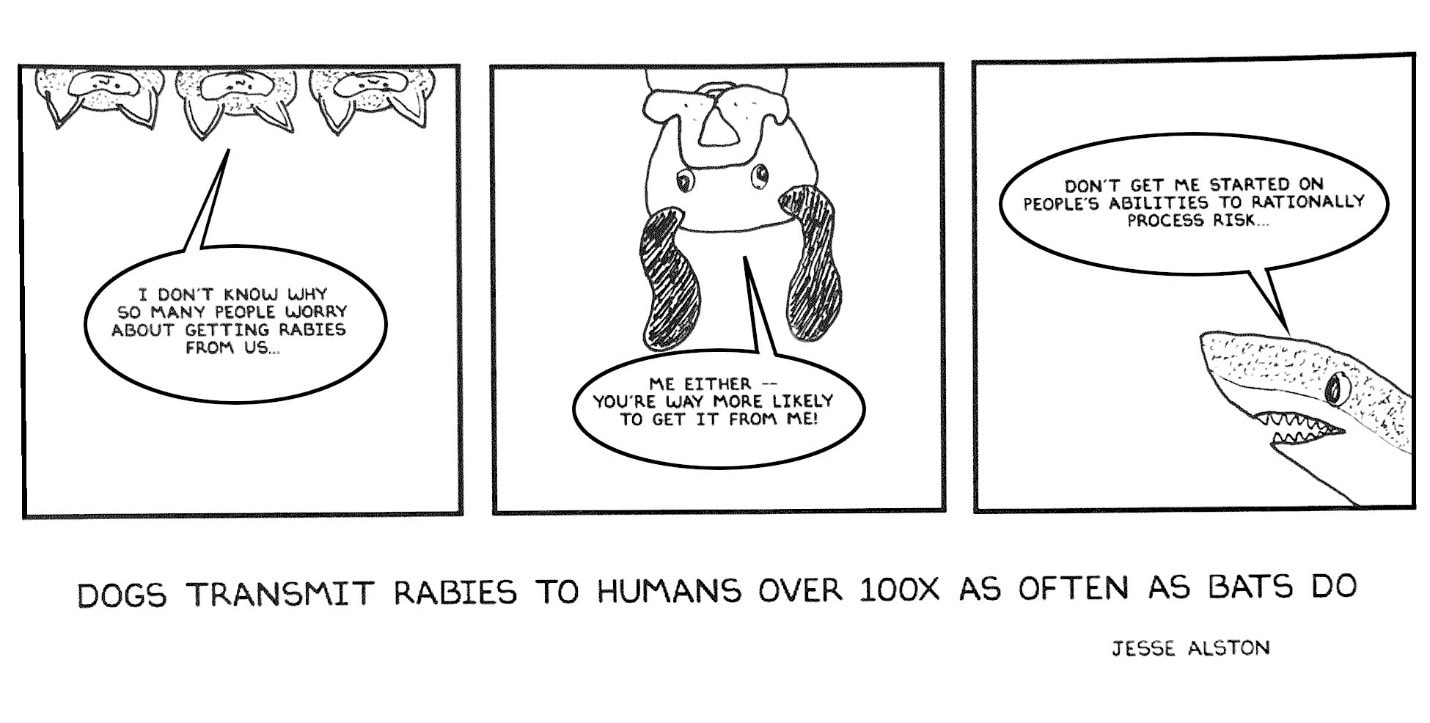
After even more thought and trial-and-error, I had a comic:
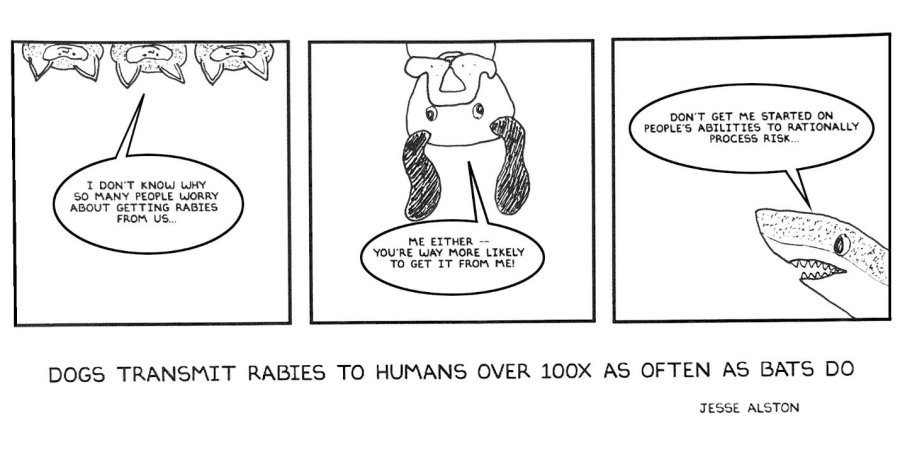
I was pretty happy with the end result—in the future, I’ll likely incorporate it into my public-facing scientific communication activities, and I’ll likely use similar characters in future efforts. Cartoons are powerful tools to use in scientific communication, and learning how to make them adds a valuable tool to my scicomm toolkit.
 Engage Laramie Science