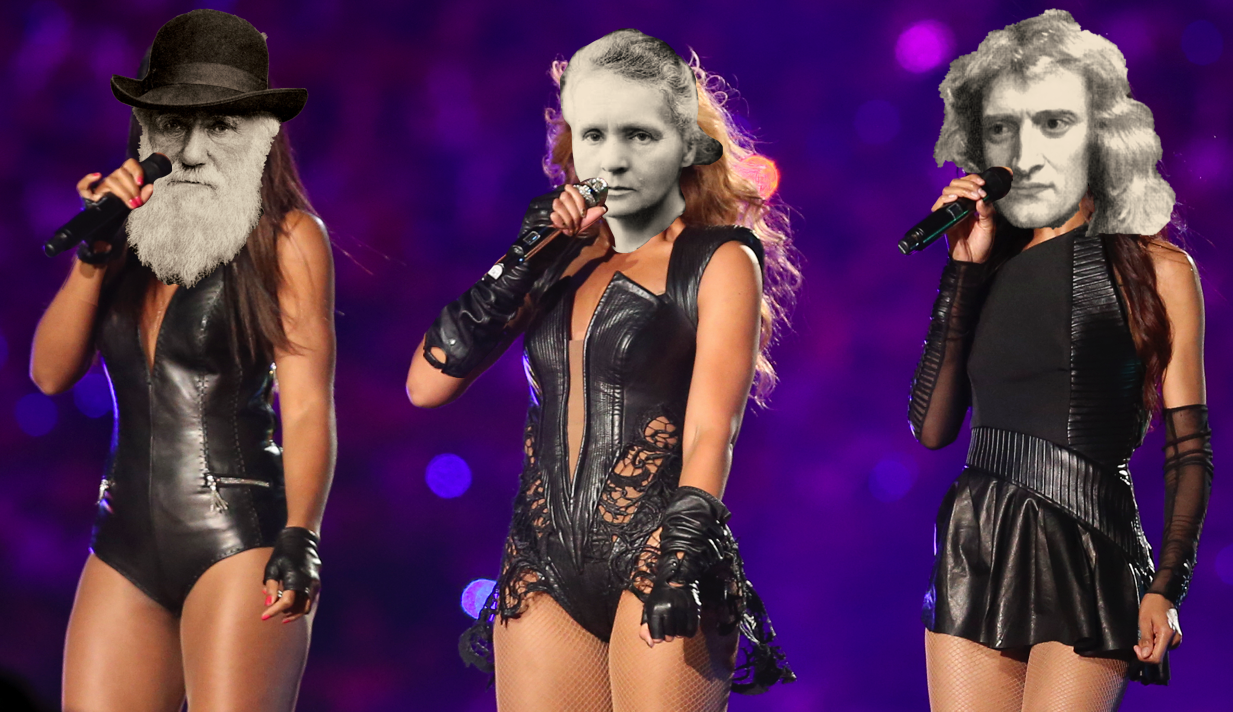

Public art serves as many functions as it has forms: it can inspire awe, joy, and pride for place and history. It is often with these net-positive reactions in mind that communities commission public art. Antagonists inevitably object to the content, cost, or even the concept of public art itself. However, without intentional beautification budgets, public art will unavoidably arise, whether by paint canister or yarn.
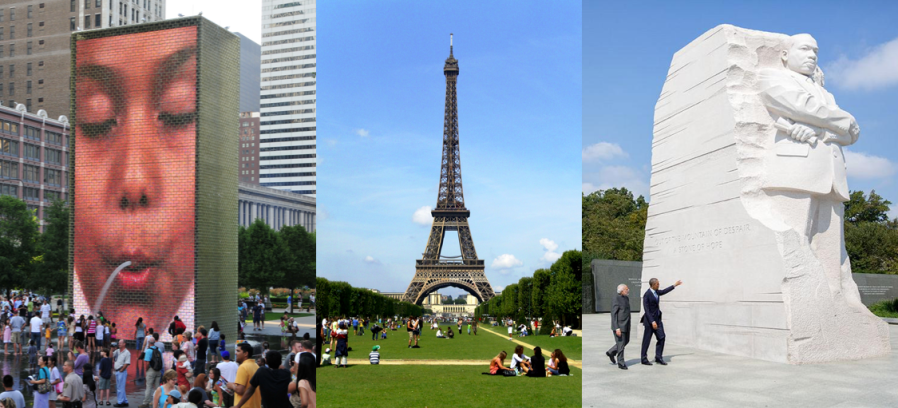
In other cases, public art may be designed to discomfort and rankle. The motivations of artists who strive to provoke can be to educate or spark dialogue, or they may be intentionally inscrutable. Whatever the goal, an artist can consider their cause célèbre as a success provided it does generate controversy.

Like public art, science rarely reaches general audiences from the mouths of scientists themselves. More often than not, discoveries are communicated through media intermediaries like popular science periodicals and documentary series. This communication runs the gambit from articulate and faithful to unforgivable inaccuracy–much to the dismay of scientists and educators. Disney’s erroneous and unethical portrayal of lemming migration as mass suicide in White Wilderness is an infamous example of this.
Even worse than having science misinterpreted, one’s work can be simultaneously misrepresented and demeaned by political leaders, such as in Arizona Senator Jeff Flake’s annual “Wastebook.” These reports follow a simple formula: (1) focus on the peculiar minutiae of a study’s methodology, (2) imply that the price tag for the entire study was for one outré method, and (3) overlook the broader impacts and actual results of the study. This generates nice bylines for the politician, and substantial hate mail for the featured scientist.
Nearly 50% of basic research in the United States is federally funded, with publicly-funded universities contributing another 20%. With taxpayers on the hook for the $50 billion+ budget devoted to pushing the boundaries of knowledge forward, we scientists should rightly expect to receive scrutiny and commentary regarding the value and validity of our work. But scientists should not feel helpless to preempt misrepresentation by regressive programming (e.g., Shark Week) or thinly-masked political theater.
It is up to scientists to bring their work to the public eye, expressing projects and intentions through mediums appropriate for a target audience. This is most important for scientists studying fields that are controversial, commonly misunderstood, and/or of great public consequence. Unfortunately, unlike divisive art, the intent of communicating controversial science cannot be to cause controversy, but rather to express evidence and consequence in the clearest, most relatable terms. This expression can and should come in many forms. The “Dance Your PhD” competition is a marvelous template for young scientists to express their doctoral research outside of academic journals in a creative and entertaining way.
The adaptation of language and simplification of figures can be sufficient to allow non-scientists to engage meaningfully with research findings. StoneyBrook University has partnered with actor and education advocate Alan Alda to train scientists in tailoring their communication to the public palate. Our Science Communication course is crafted in a similar spirit.
And on occasion, it may be required for scientists to put themselves in front of the camera and declaim empirically revealed truth. The words and visuals we provide must be carefully crafted in order to be successful, but can do wonders to broadcast and clarify the evidence good science provides. There are dozens of science advocates who excel at this, but perhaps the best known is Neil deGrasse Tyson. Who could forget the poise and power of his Round-Earth Sermon on the Nightly Show?
The author of this entry does not think scientists should aspire to celebrity in order to be heard and understood. That path leads too quickly to Scientism and the intellectual myopia that comes with it. Like public art, if our goals are for knowledge to be shared and for discoveries to understood, we scientists are obliged to put research into the public space in a way that it can be explored, enjoyed, and–when appropriate–celebrated.

 Engage Laramie Science