
Author: Dan Albrecht-Mallinger, PhD candidate studying forest birds in Panama
“Tropical biology is a new topic for many audiences, and
climate change can be difficult to describe and discuss. My professional goal is to introduce these topics approachably, accurately, and humorously when possible, so that people
can understand the strange wonder of tropical birds, and
how they are responding to the warming globe.”
climate change can be difficult to describe and discuss. My professional goal is to introduce these topics approachably, accurately, and humorously when possible, so that people
can understand the strange wonder of tropical birds, and
how they are responding to the warming globe.”
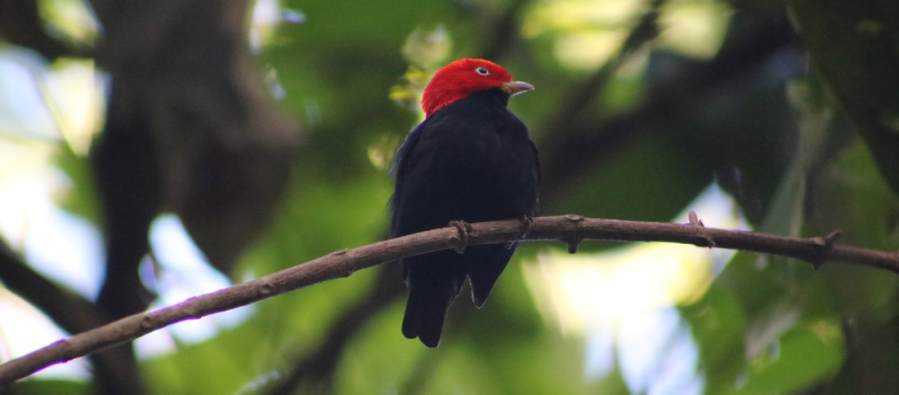
Howdy, Internet! I’m Dan Albrecht-Mallinger, and I’ll be taking the reins of the Science Communication Blog for the coming week. Most of my posts will be discussing public art, public science, and how scientists and non-scientists interact with these projects, but I’ll use this first post to introduce myself.

I grew up in Indiana, and I have worked as a biologist in Arizona, Florida, Massachusetts, the Bahamas, Argentina, and New Zealand. I completed a Masters in Biology at Virginia Commonwealth University in 2014, where I studied conservation methods for the declining Golden-winged Warbler.
I’m entering my third year of doctoral work at the University of Wyoming. My research focuses forest birds in Panama, and how their populations will respond to the droughts that are predicted to occur in tropical forests with climate change. Previous research by my advisor Dr. Corey Tarwater and her collaborators found that the populations of several iconic Panamanian forest birds decline in dry years.
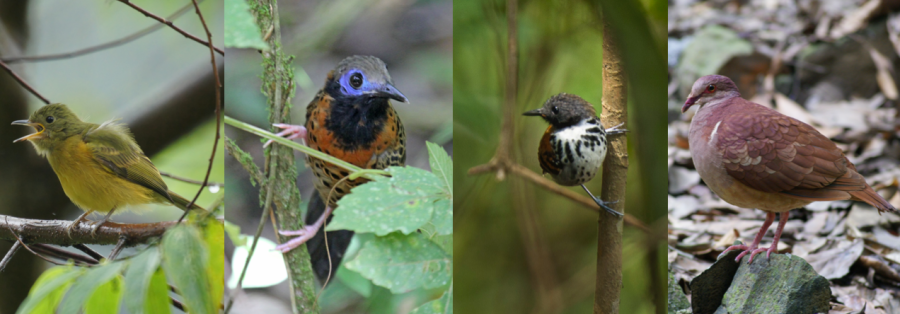
Four of the species studied in from the above-mentioned study. Photographs from Wikimedia Commons.
One drought response from this study is of particular interest to me: the alarmingly negative response of Blue-crowned and Red-capped Manakins.
Manakins are a family of small, colorful birds found only in Central and South America. They come in a wild variety of colors, but all manakins have two things in common. First, they dance; males gather in groups known as “leks”, where they perform manic and hilarious acrobatics for visiting females.
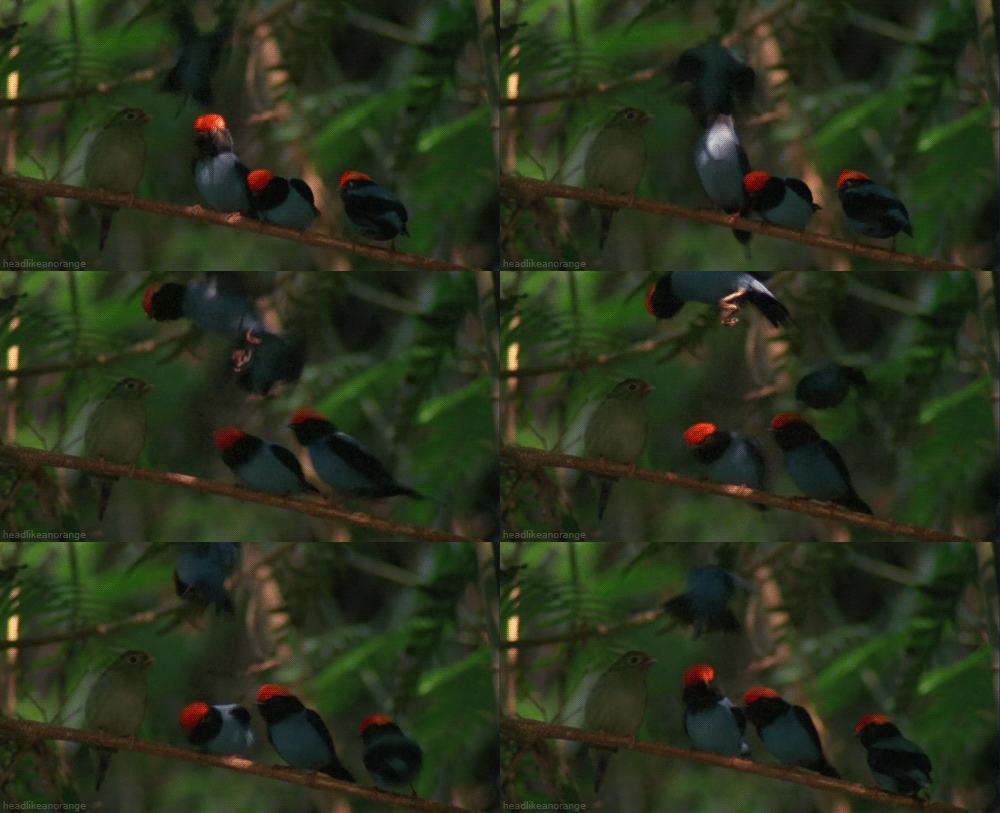
Blue Manakins -Image from BBC
|
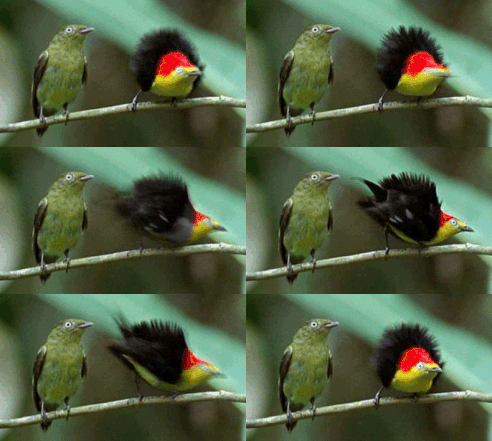
Wire-tailed Manakins
|
Second, manakins eat fruit–lots and lots of fruit. Manakins are among the most abundant and voracious frugivores (that is, fruit-eating animals) in lowland rainforests. Plant species have co-evolved with manakins, often competing with one another for manakins’ essential service of carrying seeds across the forest and…depositing them.
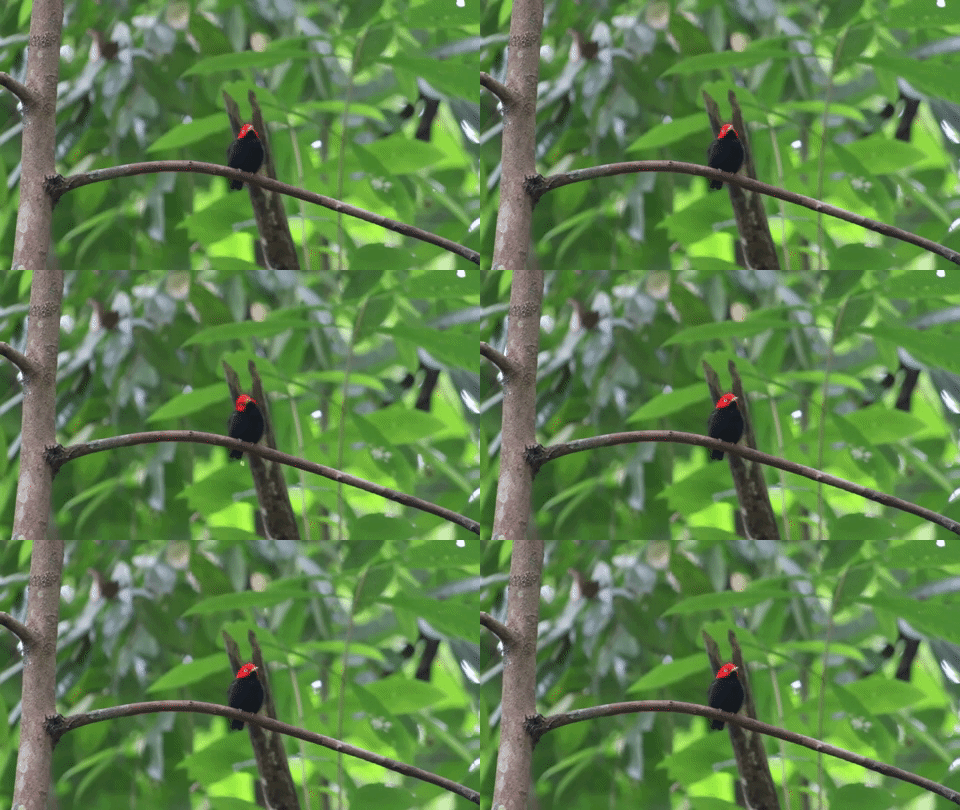
Red-capped Manakin defecating a seed – from video by Dan A-M
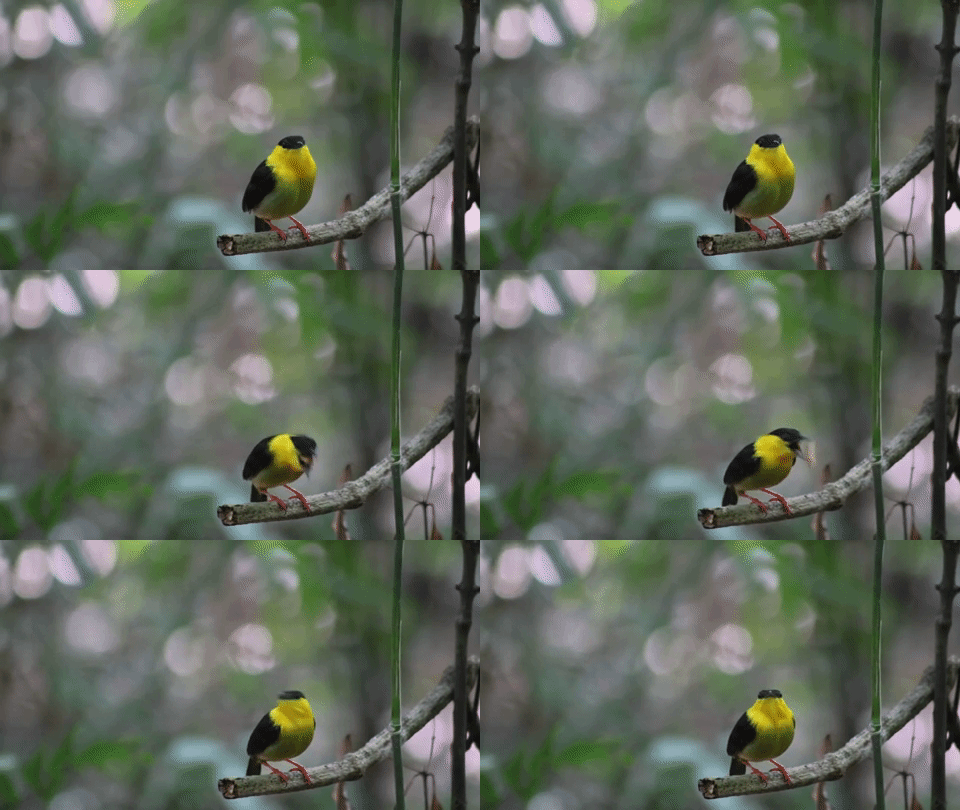
Golden-collared Manakin regurgitating a seed – from video by Dan A-M

The possibility that these charming birds will suffer as climate change limits rainfall spells disaster not only for manakins, but also for the plants that rely on them to disperse their seeds.
To gain a better understanding of why these birds decline in dry years, I am studying changes in their abundance, behavior, and physical condition along a natural rainfall gradient in Panama. The Caribbean forest of Panamá receives twice as much annual precipitation as forests on the Pacific side.
To gain a better understanding of why these birds decline in dry years, I am studying changes in their abundance, behavior, and physical condition along a natural rainfall gradient in Panama. The Caribbean forest of Panamá receives twice as much annual precipitation as forests on the Pacific side.
By measuring changes in local abundance of manakins, the length of mating periods, and weight or metabolically stress from the Caribbean to the Pacific, this study will provide a model of how manakin populations will experience the droughts forecast for the coming century.
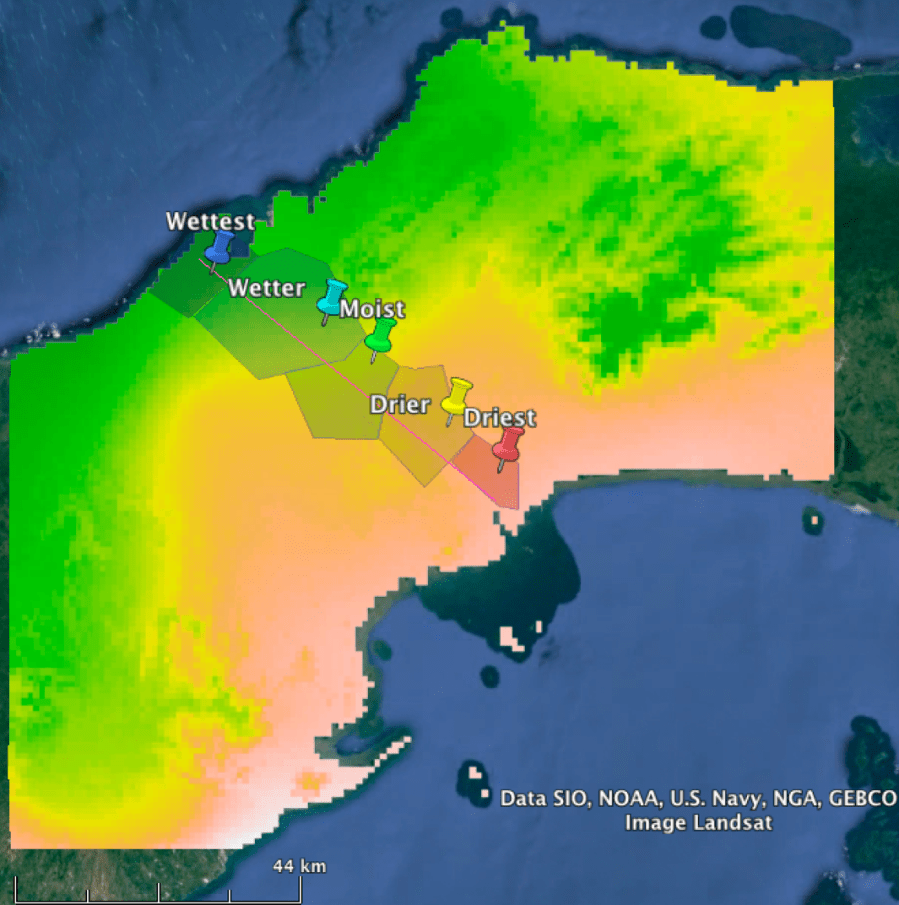
Imagery from Google Earth, with climate raster generated from Panama Canal Authority data by J. Patrick Kelley
|
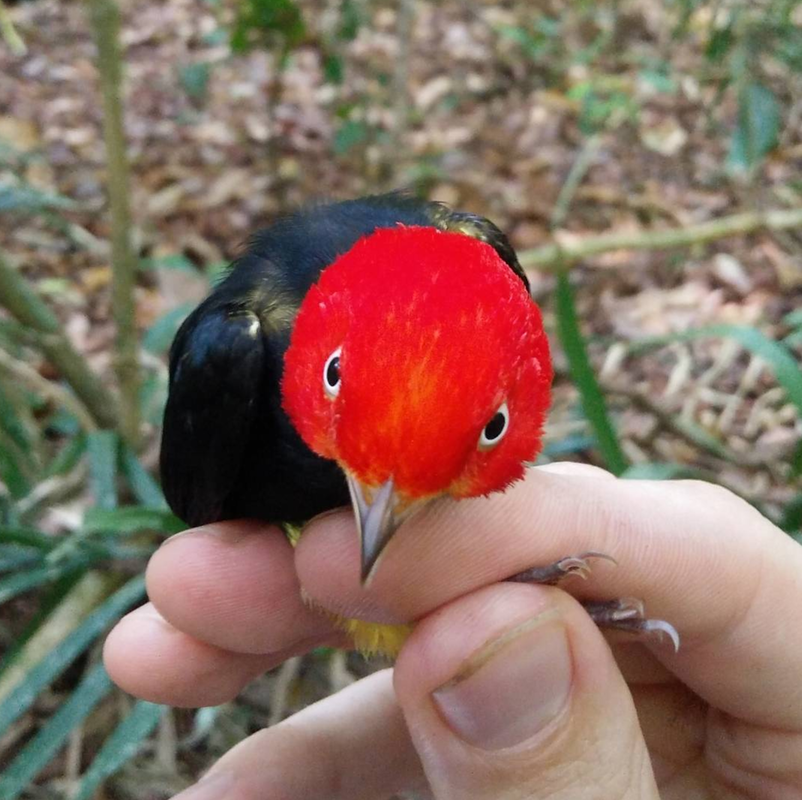
Male Red-capped Manakin captured for measuring physical and metabolic condition. Is he made because he’s captured, or because he lives in a dry forest?
|
Tropical biology is a new topic for many audiences, and the climate change can be difficult to describe and discuss. My professional goal is to introduce these topics approachably, accurately, and humorously when possible, so that people can understand the strange wonder of tropical birds, and how they are responding to the warming globe.
Well, that’s all I have for an introduction. I look forward to posting about public art/science in the coming days. For now, I’ll leave you with a video of a bird on one of my study sites trying (and failing) to woo a female with his sweet moves.
 Engage Laramie Science